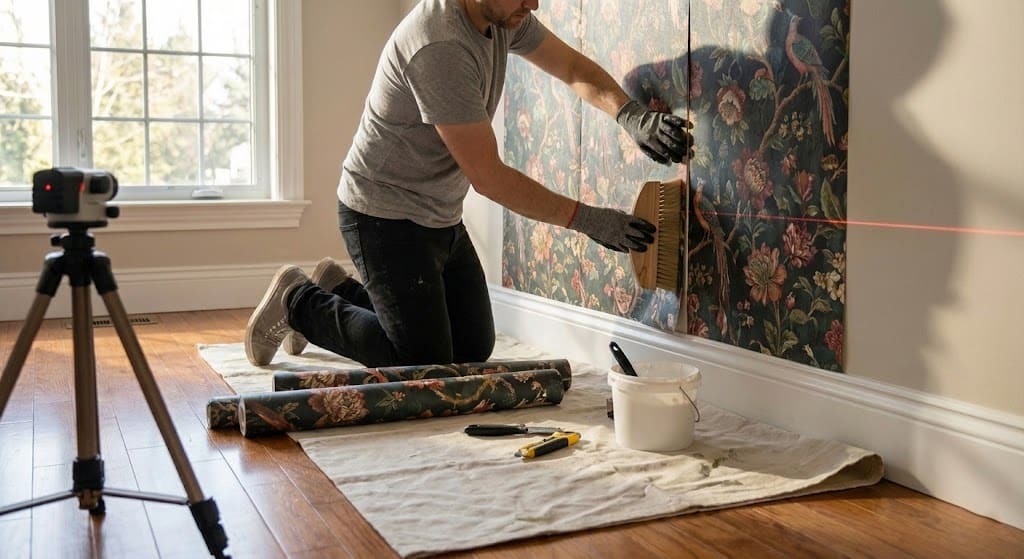
Designer Notes
- The "Drop Match" Trap: Why a 24-inch pattern repeat might actually force you to waste 50% of every roll.
- Batch Numbers Matter: Never buy rolls from different "dye lots" or the colors will be slightly off.
- The "Double Roll" Confusion: Why American wallpaper is sold in "double rolls" but priced as single rolls.
Painting is easy; if you run out, you just buy another can. Wallpaper is unforgiving.
The most common mistake I see isn't the installation—it's the ordering. A homeowner measures their wall, calculates square footage, and buys exactly that amount of paper. Then they start hanging.
By the third strip, they realize the flowers don't line up. To make them match, they have to cut off 18 inches of paper from the top of the next strip. Suddenly, they are two rolls short, the store is out of stock, and the project is ruined.
Wallpaper math isn't about wall size; it's about Pattern Repeat . Today, I'm going to teach you how to calculate the "waste factor" so you never run short.
The Setup
Before you order $500 worth of paper, you need to understand exactly what you are measuring.
-
Steel Tape Measure Measure width and height in inches. Do not round down.
-
Pattern Sample Look at the back of the sample book. Find the number labeled "Vertical Repeat."
-
Roll Calculator Our tool accounts for the pattern drop automatically.
Decoding the Label: The 3 Types of Match
When you buy a roll, look for the symbol that indicates the "Match." This tells you how the design on the left side of the strip aligns with the design on the right side. This determines how much paper you are going to throw in the trash.
1. Random Match (Zero Waste)
Think: Textures, Grasscloth, Vertical Stripes.
The pattern matches no matter where you cut it. You can line up the next strip anywhere. This is the easiest to hang and wastes almost no paper.
2. Straight Match (Medium Waste)
Think: Horizontal stripes, squares, simple damasks.
The pattern starts at the exact same height on every strip. If the bird is at the top of Strip 1, the bird must be at the top of Strip 2.
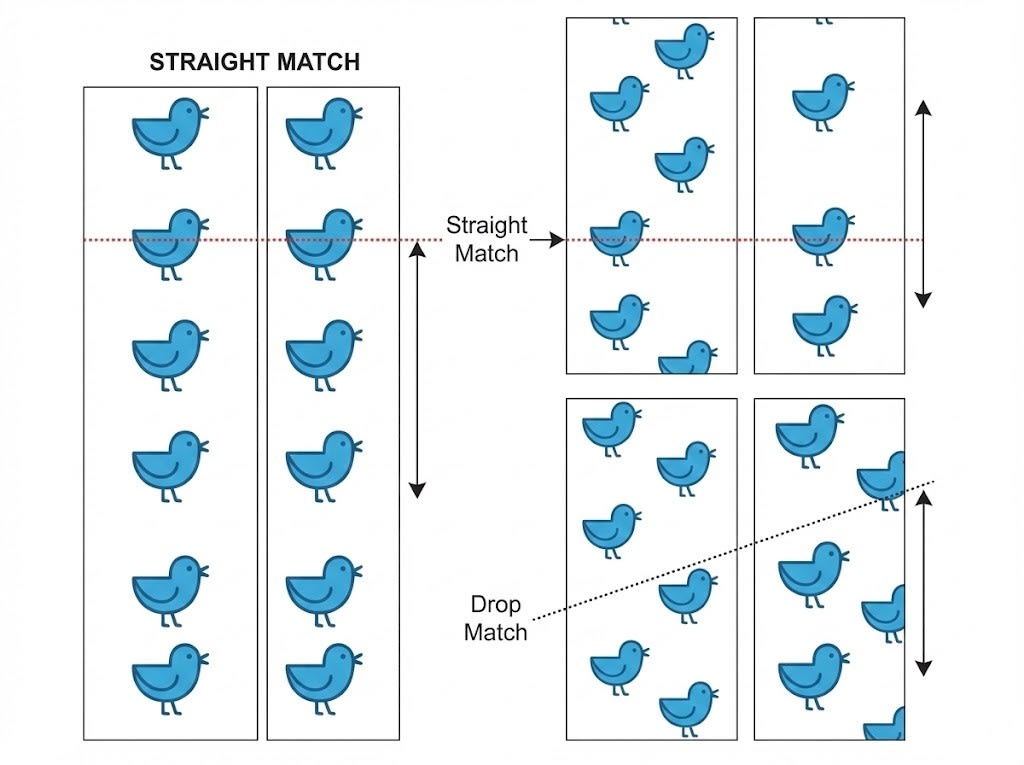
3. The "Drop" Match (High Waste)
Think: Complex florals, intricate geometrics, toiles.
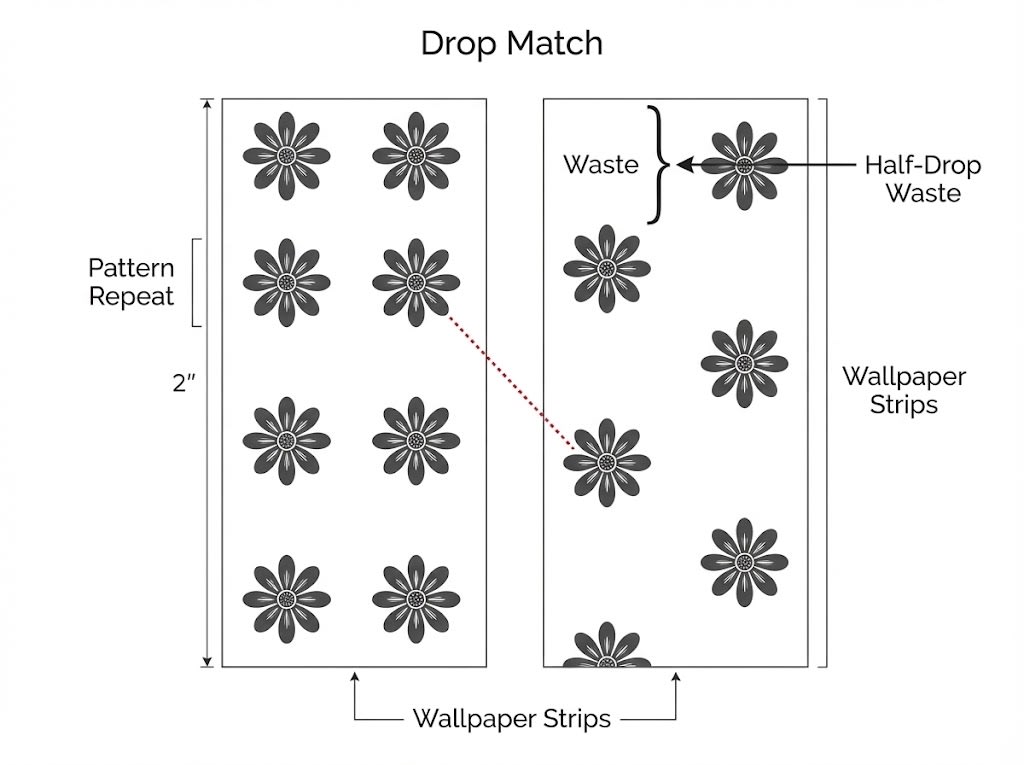
This is the wallet killer. The pattern runs diagonally. To match the right side of Strip 1, you have to slide Strip 2 down by half the pattern repeat (usually 10 to 12 inches). That 12 inches of paper at the top? You cut it off and throw it away. Every single time.
The "Safe" Math Rule
Because you cannot buy "half a roll," you must round up. But for pattern repeats, you need to add a specific percentage to your total square footage to account for the waste.
| Pattern Type | Repeat Size | Waste Factor |
|---|---|---|
| Random / Texture | 0" | 0% - 5% |
| Small Pattern | 0" - 6" | + 10% |
| Large Straight Match | 7" - 18" | + 15% |
| Large Drop Match | 19" - 25" | + 25% (Critical) |
Don't Do the Math Manually
Our calculator has a "Pattern Repeat" input. You just type in the number from the label (e.g., "21 inches") and select "Half Drop," and we calculate the waste for you.
Calculate RollsThe "Double Roll" Scam
If you look at the price tag, it says "$50 per single roll." But when you go to the register, you are forced to buy a "Double Roll" for $100. Why?
The Industry Standard
Historically, wallpaper was sold in small "Single Rolls" containing about 25-30 square feet. But these were too short for modern high ceilings.
Today, almost all manufacturers package their paper as **"Double Rolls" (also called Bolts)**. One physical roll actually contains two single rolls worth of paper.
Always check the total square footage on the label. A standard US Double Roll covers roughly 56-60 sq. ft.
Rule #2: Watch the Dye Lot
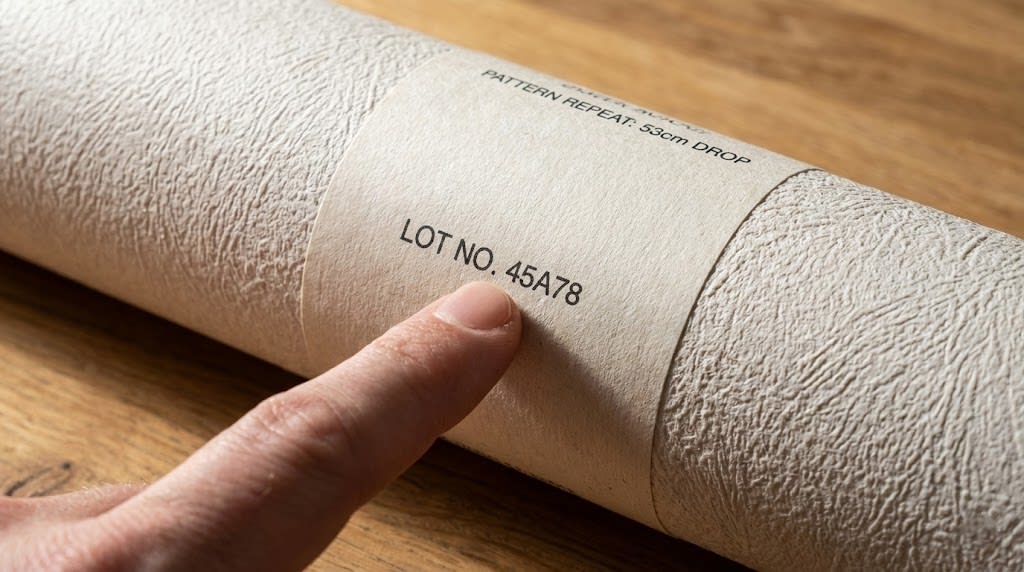
Wallpaper is printed in batches. The ink mixture for "Batch A" might be 99% blue and 1% red. The mixture for "Batch B" might be 98% blue and 2% red.
The Nightmare Scenario
You buy 4 rolls today. You realize you are short, so you buy 1 more roll next week. You hang them side-by-side.
The new roll looks slightly darker. You can't unsee it. The entire wall is ruined.
Step 0: The "Sizing" Secret
Don't Paste Raw Drywall
If you paste wallpaper directly onto drywall (or flat paint), the wall drinks the moisture from the glue instantly. The paper won't stick, or worse, when you try to remove it later, it will rip the drywall face off.
Wallpaper FAQ: Sticky Situations
Is "Peel & Stick" wallpaper any good?
Should I "Paste the Wall" or "Paste the Paper"?
**Paste the Paper:** Usually required for paper-based wallpapers that need time to "book" (expand) before hanging.
**Paste the Wall:** Common for modern non-woven wallpapers. It is much cleaner and easier because you don't need a pasting table.
What do I do with outlets and switches?
Order Extra, Sleep Better
The worst feeling in the world is staring at a half-finished wall knowing the store is sold out of "Batch #402." Calculate your pattern repeat waste, buy one extra double-roll for insurance, and enjoy the flawless finish.